
Lab automation / software / bioinformatics

Currently at Predictive Oncology

Engineering autonomous labs that think, plan, and execute.

I design robotics, software, and active-learning pipelines that give scientists parallelized, always-on experimentation. From deck layout optimizers to SQL-RAG agents, I build tools that move discoveries faster.

Now

Optimizing multi-handler decks to minimize tips and LHOPs while maximizing throughput.

Field Notes

Just back from SLAS 2026 in Boston - presented a frugal self-driving lab, toured Ginkgo, and found the real conference in the gaps between talks.

Read the dispatch →
Base

Pittsburgh, PA - open to rebasing.

Jonathan Potter headshot

Building for scientists

  • Deck orchestration that schedules liquid handlers in parallel.
  • Local LLM agents with SQL-RAG + MCP for grounded reporting.
  • Clinical-grade qualification studies for new hardware and software.
  • Spheroid analytics to map tumor response beyond 2D microscopy.

v0.2.8 beta Apache 2.0

On the side, I built Forge.

An open-source visual pipeline tool for data scientists. Every block is a cached step - change one parameter and only the downstream blocks re-run. Battle-tested in oncology research at Predictive Oncology.

stale running complete

About

Automating the scientific loop

I'm an Automation Engineer from Carnegie Mellon, where I obtained a Master's in Automated Science with a background in Biological Systems Engineering. I translate ideas from wet-lab teams into robotic protocols, AI-driven experiment planners, and user-friendly apps that scientists trust.

My goal is simple: let robots handle the repetitive and precise chores so that researchers, models, and agents can run more experiments, gather cleaner data, and invent faster.

Active learning + robotics Custom labware + 3D printing Bioinformatics and analytics

Stack

Python, Go, SQL (MySQL, MSSQL, Oracle), MATLAB, R, Arduino C++, Java

Hardware

Opentrons OT-2, Thermo Fisher Momentum, CyBio Felix, custom CAD/3D-Print fixtures

Specializations

MCP, SQL-RAG, computer vision for microscopy, QC, and plate readouts

Capabilities

Skills that ship

From concept to qualified deployment across robotics, analytics, and full-stack tooling.

Automation and Robotics

  • Opentrons OT-2 protocol design and persistent runtimes
  • Deck layout optimization, LHOP minimization, tip budgeting
  • Thermo Fisher Momentum and CyBio Felix integration

ML and Intelligence

  • Active learning loops with Gaussian processes
  • Local LLMs with SQL-RAG and MCP for grounded agents
  • Computer vision for microscopy and plate imaging

Software Engineering

  • Backend services for experiment orchestration
  • Full-stack dashboards and scientist-facing GUIs
  • Clinical-grade qualification studies and validation

Bioinformatics

  • Spheroid data pipelines and chemo response analysis
  • LIMS integrations and data harmonization
  • Plate design, QC, and reporting

Experience

Where I have been

Predictive Oncology

Software Developer / Bioinformatician / Automation Engineer

Aug 2025 - Present | Pittsburgh, PA

  • Built a backend app that ingests patient-drug experiments and schedules liquid handler decks for tip- and LHOP-efficient runs across multiple robots.
  • Shipped a full-stack platform with local LLMs using SQL-RAG and MCP so scientists can deploy agents that generate grounded reports with linked sources and charts.
  • Lead clinical-grade qualification studies to introduce new lab software and hardware safely.
  • Investigate spheroid data to map tumor responses beyond 2D microscopy benchmarks.
Magnify Bioscience

Automation Engineer

Sep 2024 - Aug 2025 | Pittsburgh, PA

  • Automated a six-hour chemical workflow on Opentrons OT-2s with heater-shaker modules, reclaiming hours of walkaway time.
  • Designed custom 3D-printed hardware to improve throughput and consistency.
  • Created a GUI so non-programmers could execute the protocol reliably.

Predictive Oncology

Bioinformatics Intern

May 2024 - Aug 2024 | Pittsburgh, PA

  • Developed software that merges patient and treatment data from LIMS to strategize plate layouts and generate liquid handler scripts.
  • Built a portable script-generation pipeline to bridge legacy and modern liquid handlers.
  • Benchmarked performance to guide hardware selection trade-offs.

Collins Lab, UC Davis

Bioinformatics Intern

Apr 2020 - Aug 2023 | Davis, CA

  • Built cell-specific ML models (CellPose, NumPy, TensorFlow) for quantitative microscopy.
  • Rebuilt an automated pipetting robot with custom 3D-printed components and Python control.
  • Partnered with biostatisticians to shape new experiment directions.

Selected Work

Projects

Backend - Orchestration

Deck Orchestrator

Backend application that ingests patient-drug experiment sets and computes the most tip- and LHOP-efficient way to execute across multiple liquid handlers in parallel.

LLM - SQL-RAG - MCP

Lab Intelligence Agents

Full-stack platform running local LLMs with SQL-RAG and MCP so users can deploy agents that safely explore proprietary databases, returning reports with linked ground-truth evidence and visualized trends.

Active Learning

Color Matching Loop

Gaussian-process-driven color matching that autonomously proposes dye recipes. Watch it in action.

View demo video
Clinical Data

CorteX

24-hour hackathon build: NLP and a rules engine that parses clinical criteria and ranks patient-trial matches with inclusion/exclusion reasoning.

GitHub

Games

Card game

Shovels

Rules, turn checklist, and card reference.

Shovels rules

Browser game

Guess the Character

Play

Highlights

Teaching, demos, and recognition

SLAS logo

SLAS 2026 MVP Poster Presenter

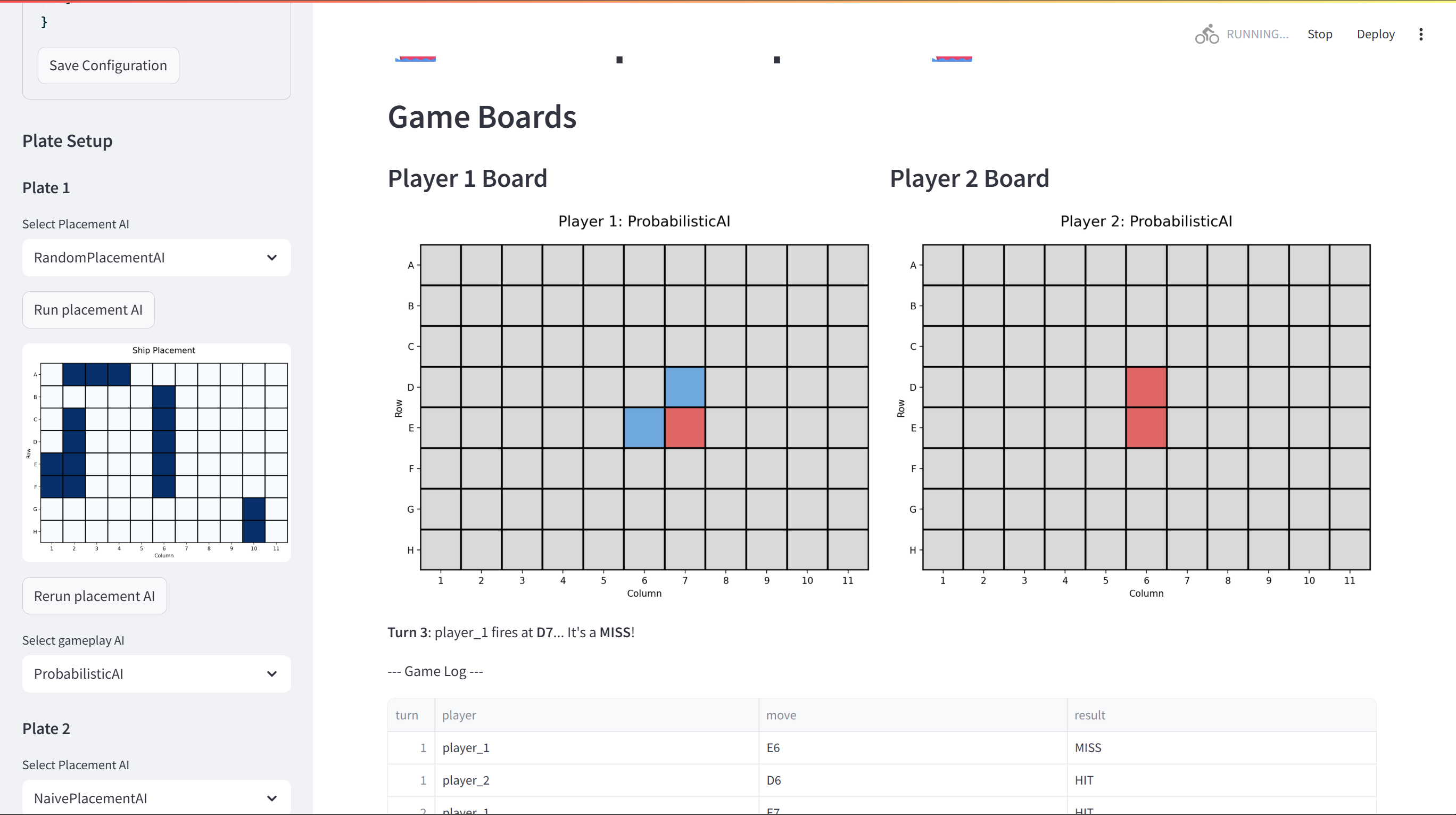
Boston, Feb 2026. Sharing a frugal self-driving lab that runs color matching and acid/base "Battleship" on an Opentrons OT-2.

Read abstract
Battleship frontend screenshot

Autonomous Labs, CMU x Dr. Josh Kangas

Co-designed a 4-week pre-college course on automated labs: GP-driven color matching and "Battleship" with pH indicator targeting. Students built agents to control the OT-2.

See the active-learning loop

Vision

Labs that never sleep

Robots should handle every repetitive task they reliably can so that scientists stay focused on questions, not chores. I'm building toward round-the-clock, parallelized lab operations that surface ground-truth data with traceable provenance.

Automation is not about replacing scientists; it is about freeing them to design better experiments, interpret richer data, and ship discoveries faster.

Contact

Let's collaborate

Reach out for roles, collaborations, or to swap notes on lab automation.