Getting There
Delayed, frozen, and already talking about Ginkgo
I'd never been to Boston before, not really. I've passed through Logan on connections. This time I actually landed - into freezing winds and, as the week went on, the kind of sideways sleet that makes you reassess your coat. I want to go back in the summer. I think I'd like it.
The conference started, for me, at the gate. Our flight was delayed five hours by snow. I found myself waiting with Josh Kangas and Christopher Langmead from Carnegie Mellon, and we spent the time talking through the OpenAI × Ginkgo Bioworks announcement that had just dropped. Chris called it low-hanging fruit. He wasn't wrong. But he also said it was a sign of the times. That felt right too. That framing - low-hanging fruit, but a sign of the times - stayed with me for the rest of the week.
Day Zero
The old guard and the students who came to understand their agents
The conference technically starts on Tuesday, but SLAS offers short courses on Monday. I attended Streamlining Your Lab With Python, taught in part by Mark Russo and William Neil, men who carry the energy of people who have been doing this since before Python had a package manager. Strong opinions on architecture. The kind of competence that doesn't need to perform itself.
The material was foundational - below where I work day-to-day - but I picked up a few things, and I was glad to see PyLabRobot make it onto the last couple of slides. It felt like an acknowledgment. What struck me more was the room. Several students admitted they'd signed up for the course to understand what their coding agents were building. I saw at least a few Claude Code instances open on laptops. The instructors had used LLM chatbots, but I didn't clock them as people who would pay for one. Their students would, and did, and were using them to write the code the instructors were trying to teach.
Nobody was hostile about it. It was just a gap, visible and quiet, between two generations who both want the same thing - better lab software - and are arriving at it from opposite directions.
I missed dinner with Josh that night due to the delays. Grabbed a pizza and a pint at the hotel bar, got good sleep, and spent an hour working on a reinforcement learning agent I've been building that learns to play a card game I invented. Good way to decompress.
Day One
The floor is the conference
I had come in with a full calendar of talks. I left most of them. The expo floor is where SLAS actually happens, and it took me half of Day One to understand that.
The opening ceremony was fine. The CEO of SLAS, Vicki Loise, gave a practiced, optimistic talk about AI entering the lab. Nothing off-script, but delivered with genuine warmth. The following speaker - I believe the CEO of Thermo Fisher - read from a teleprompter in a way that made me wonder if he'd seen the text before. I retained nothing. The keynote that followed ran twenty minutes of credentials for a hyperspecific drug discovery story that didn't intersect with my work. I walked out and went looking for the Trilobio booth.
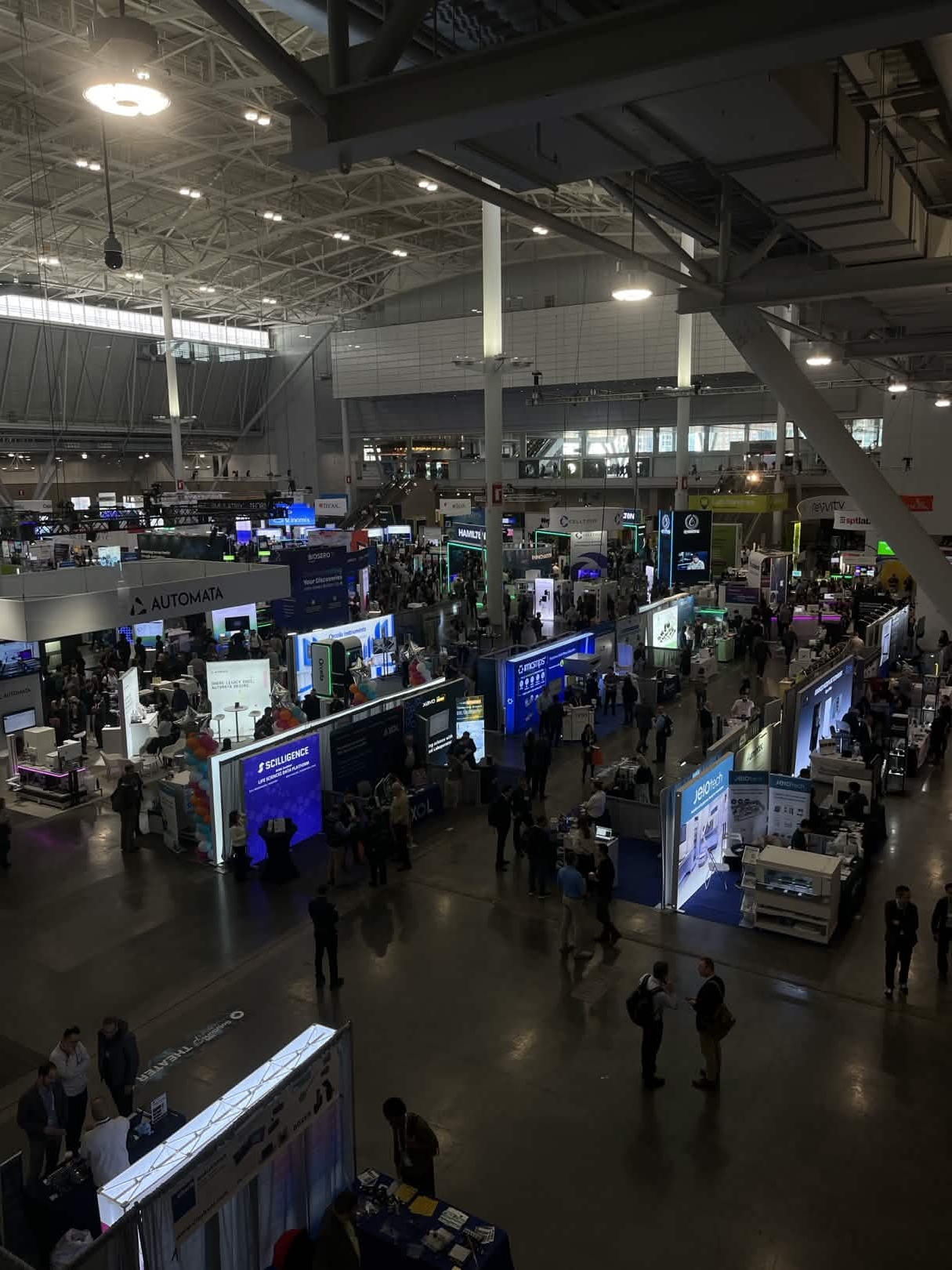
I'd noticed Trilobio setting up on Monday. About a year ago I interviewed there - first with Maximilian Schommer, co-founder and head of robotics, and we went 45 minutes over time just talking about where the field is going. Then came a technical interview I wasn't ready for. I didn't get the role.
Seeing them set up the booth made me feel something I couldn't quite name. Not dread. Something more like unfinished business. So I walked over, found an open angle on their robot demo, and watched.
"Is that Jon Potter?" Max was on the other side of the glass. "I've been following your journey on LinkedIn, man - how's it going?"
We spent the next forty minutes catching up. He mentioned, with what I choose to believe was genuine warmth rather than politeness, that the role I interviewed for no longer exists at the company - the direction changed. He's now working on solvers and schedulers for their parallelization problem, which is exactly the kind of work I find interesting. Their radial-axis liquid handler is slow, but the architecture - modular Trilobio units that link and stack, massively parallelizable - is genuinely promising. Get it faster and it becomes a real contender.
Good conversation. The kind you don't get from a talk.
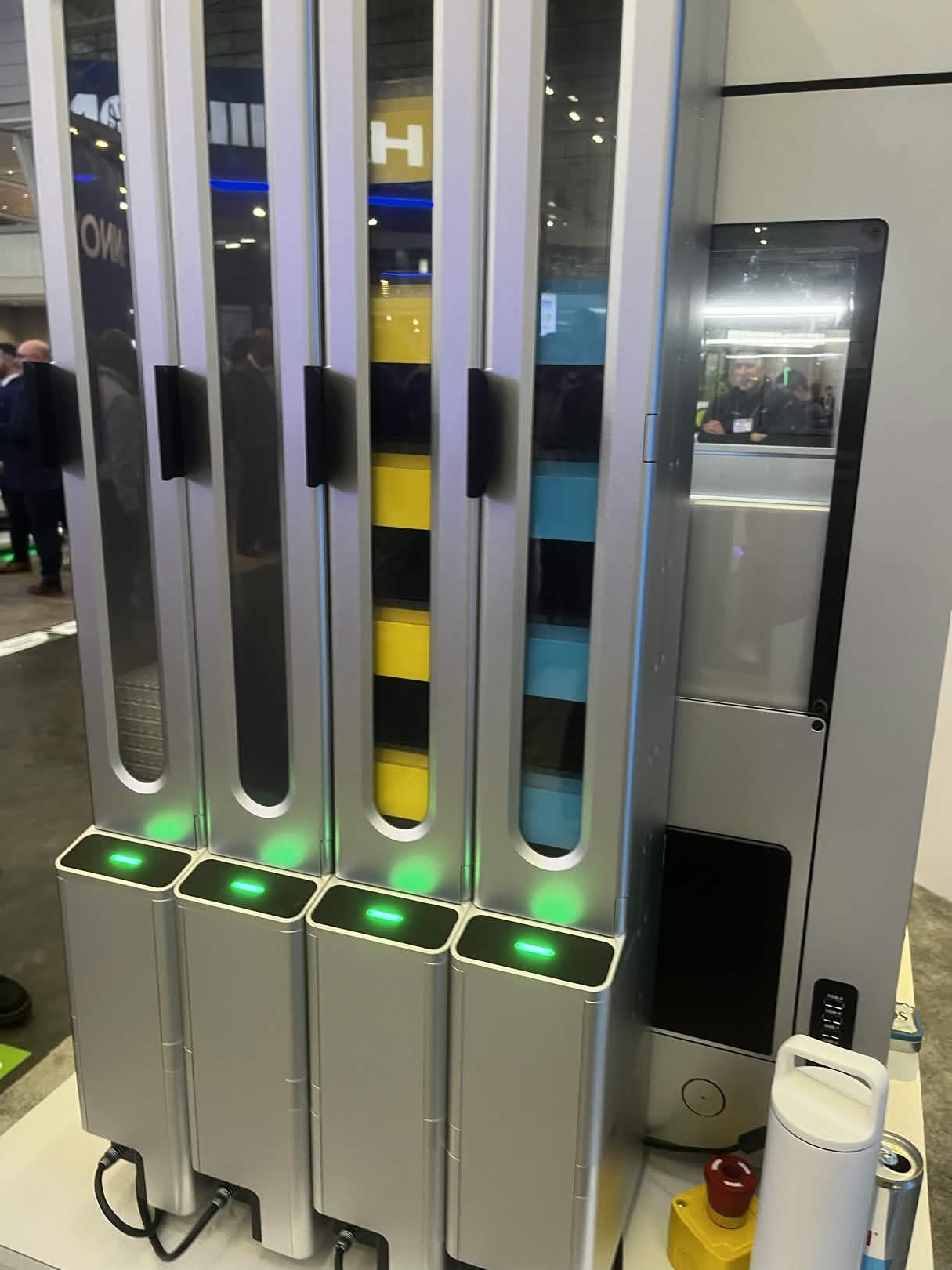
I also spent time at the Opentrons booth with the Flex. The stacker module is interesting - it moves labware on and off deck via conveyor, which opens up real throughput gains. I'd love to see that conveyor concept extended: mirror the design, connect two Flex decks, and you have a transfer line between instruments. The hardware is almost there. The software and scheduling layers are where the work needs to happen, and that's a hard problem. I'm optimistic about where this goes over the next couple of years as the ecosystem matures.
The Flex stacker would be useful for my lab. I'll be keeping an eye on it.
Day Two & Three
VLMs, world models, and a lab that feels like the future
On Day Two, the Opentrons CEO gave a joint talk with NVIDIA about AI-assisted protocol generation and a forthcoming camera system for mid-run QC using a vision-language model. The QC-via-camera direction makes a lot of sense to me - it's exactly the kind of closed-loop error detection that makes automation trustworthy rather than just fast. I'm curious to see how the VLM performs on real plate artifacts: glare, meniscus, bubbles. These are harder than they look. The synthetic training data partnership with NVIDIA's world model is an interesting approach to the data problem. I'll be watching.
What I want to see next from the ecosystem broadly: more interoperability. Right now, every platform is an island. The labs that are winning - and you could see it on the floor - are the ones building bridges between instruments, not just optimizing within a single workcell.
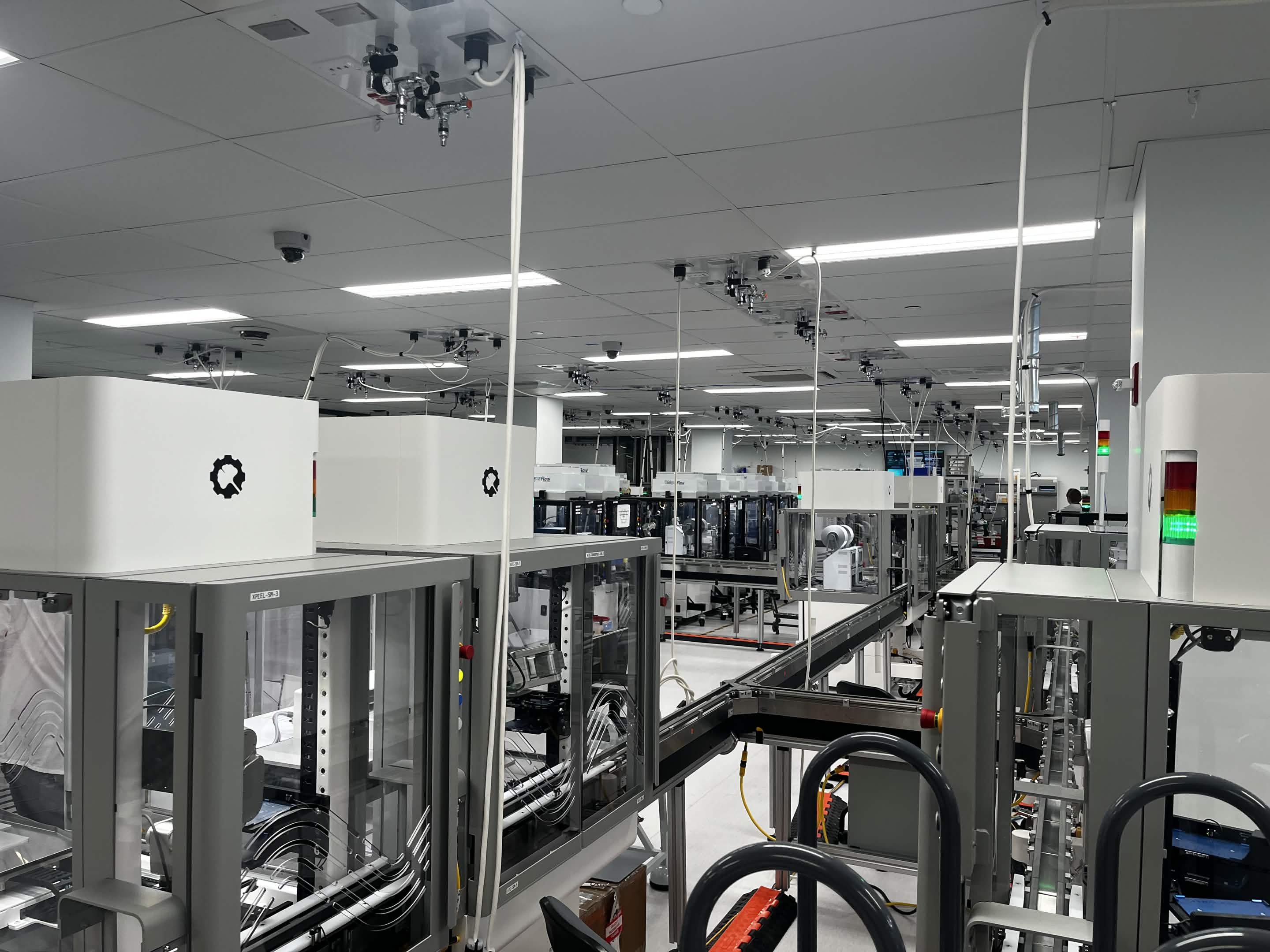
Day Three included a tour of Ginkgo Bioworks, and it was the highlight of the week. MagLev plate movers. Isolated instrument racks. Massive parallelization via track systems that open up the whole floor rather than a single deck. The OpenAI collaboration on experiment planning felt real and grounded - not a press release, an actual working system. Ginkgo is also moving toward Cloud Lab services alongside their contractor model for setting up automated labs, which is a smart hedge. It's a lot more capable than a workcell with a single arm, and being there made the possibilities concrete in a way that slides don't.
One notable absence: ECL had no booth and no visible presence at SLAS. For a company building cloud laboratory infrastructure, not showing up at the field's flagship conference is a conspicuous choice.
The Margins
Speakeasies, education, and lobster rolls in a science museum
The best conferences happen in the gaps between the scheduled parts. A few from this one:
The PyLabRobot team invited our group to a speakeasy on Tuesday night - the invite came partly because they're too principled about open-source to use Discord for the announcement. I respect the commitment, even where I'd make a different call. The hacker mindset is real with these folks. They're building toward an open, hardware-agnostic control layer for liquid handlers, and the more traction they get, the better it is for everyone who wants to do something the OEM didn't anticipate.
Josh Kangas and Kennedy McDaniel Bae hosted a forum on the state of education in lab automation. I agreed with nearly everything said. This field has no standard pipeline for how people arrive in it, no consistent job titles, and no clear signal to prospective engineers that it exists. "Bioinformatician," "Automation Engineer," "Lab Scientist II" can all describe the same role depending on the company. The people doing this work are few, they're hard to find, and the field doesn't yet know how to reach them. That's a problem worth solving, and I'm glad people are naming it out loud at a conference this size.
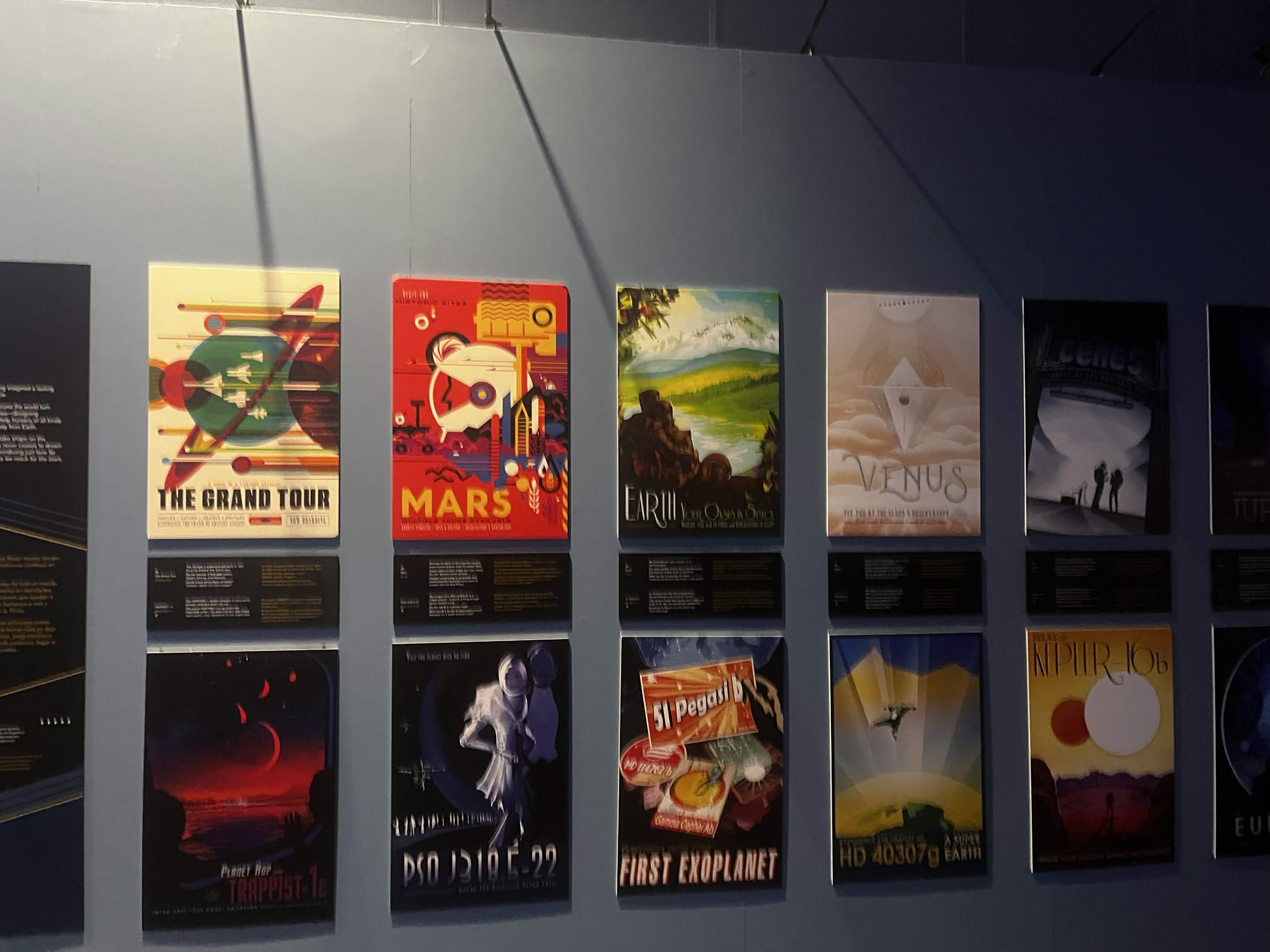
Hamilton rented out the Boston science museum for the Monday night party and let several hundred automation engineers loose in it with good bourbon and lobster rolls. I spent most of the evening with Josh and Melody Wang from Generate Biomedicines - she was my mentor for my first CMU capstone - trading notes on the week's best and worst ideas. The exhibit rooms were open. It was quite fun.
My Work
A frugal self-driving lab, presented
I presented a poster on work done with Josh Kangas, John Kitchin, and Stefan Bernhard at Carnegie Mellon. The short version: we built a closed-loop self-driving lab on an Opentrons OT-2 - six $70 cameras on 3D-printed mounts, a persistent protocol runtime that avoids the six-minute reboot penalty, and a Gaussian process that proposes the next experiment. We ran it with ~100 high school students using dye color matching and an acid-base Battleship game.
Students outperformed the AI in round one, consistently. By rounds three and four, the GP had the edge. The Battleship bracket ran fully automated. The point wasn't that the AI wins - it's that the loop works, it's affordable, and it teaches active learning in a way that's tangible. Open-source code and CAD are available.
A Frugal Self-Driving Lab on Opentrons OT-2
Closed-loop color matching and acid-base "Battleship" on a low-cost OT-2 platform. Six fixed cameras on 3D-printed mounts, a persistent runtime architecture, Gaussian-process active learning with simplex-constrained recipe volumes. Deployed for ~100 high school students in 2025.
Students outperformed the AI in early rounds; the GP gained the edge by rounds three and four. Battleship ran a full single-elimination bracket with automated scoring. Designed to generalize across assay-like tasks without expensive optics or vendor-locked workflows.
Read the full abstractNo delays on the flight home. I was exhausted in the good way - the kind that comes from five days of conversations that actually went somewhere. The field is smaller than it looks from the outside and larger than it feels when you're in it. The people building the next layer of lab automation are mostly findable: they show up at a speakeasy when the PyLabRobot team sends an invite, they argue about job titles in an education forum, they eat lobster rolls in a science museum. I'm glad to be among them.
Boston in February: go back in summer. The conference: go back next year.